Home/Treatments/Skin tag removal
Skin tag removal in downtown Royal Oak, MI
Skin tags that catch on necklaces, collars or bra straps can be a daily irritation. After an evaluation confirms a growth is a benign skin tag, selected tags can be removed in the office with targeted cold treatment.
At Aesthetic Beauty by Serena, PA-C, skin tags are first examined to confirm they are benign. Selected tags are then treated with targeted cryotherapy: controlled cold destroys the tag’s tissue, which dries, crusts and falls away as the skin heals. Size, location and appearance decide whether a tag is suitable.
A skin tag is a small, soft, benign growth that often hangs from the skin by a narrow stalk. Tags are especially common where skin rubs against skin or clothing: the neck, the underarms, the eyelids and other skin folds. They are harmless in themselves, but many people want them gone because they snag on jewelry, get irritated by shaving or simply bother them in photos.
Removal is a cosmetic choice, which is exactly why the first step is making sure the growth really is a skin tag. A few other growths can look similar at a glance, and some of them need a different treatment or a medical diagnosis before anything is removed.
Not every skin tag is a good candidate for in-office removal. A very large tag, one in a delicate spot such as close to the eye, or a growth with unusual features may be better handled with another method or referred for medical assessment. You will be told honestly if that is the case.
Cold treatment is used for several kinds of spots and growths. If you have age spots, seborrheic keratoses or warts rather than skin tags, our cryotherapy page explains those lesions in more detail.
The location of a tag affects whether it is suitable for removal and how it is approached.
A common place for tags, often where a collar or necklace rubs throughout the day.
Friction from movement and clothing makes tags here easy to irritate, especially when shaving.
Tags close to the eye need particular care. Whether one is suitable for removal depends on its size and exact position.
Tags can form wherever skin creases and rubs, including under the breasts and around the groin.
Seborrheic keratoses, warts and other bumps can be mistaken for skin tags. An evaluation sorts out which is which.
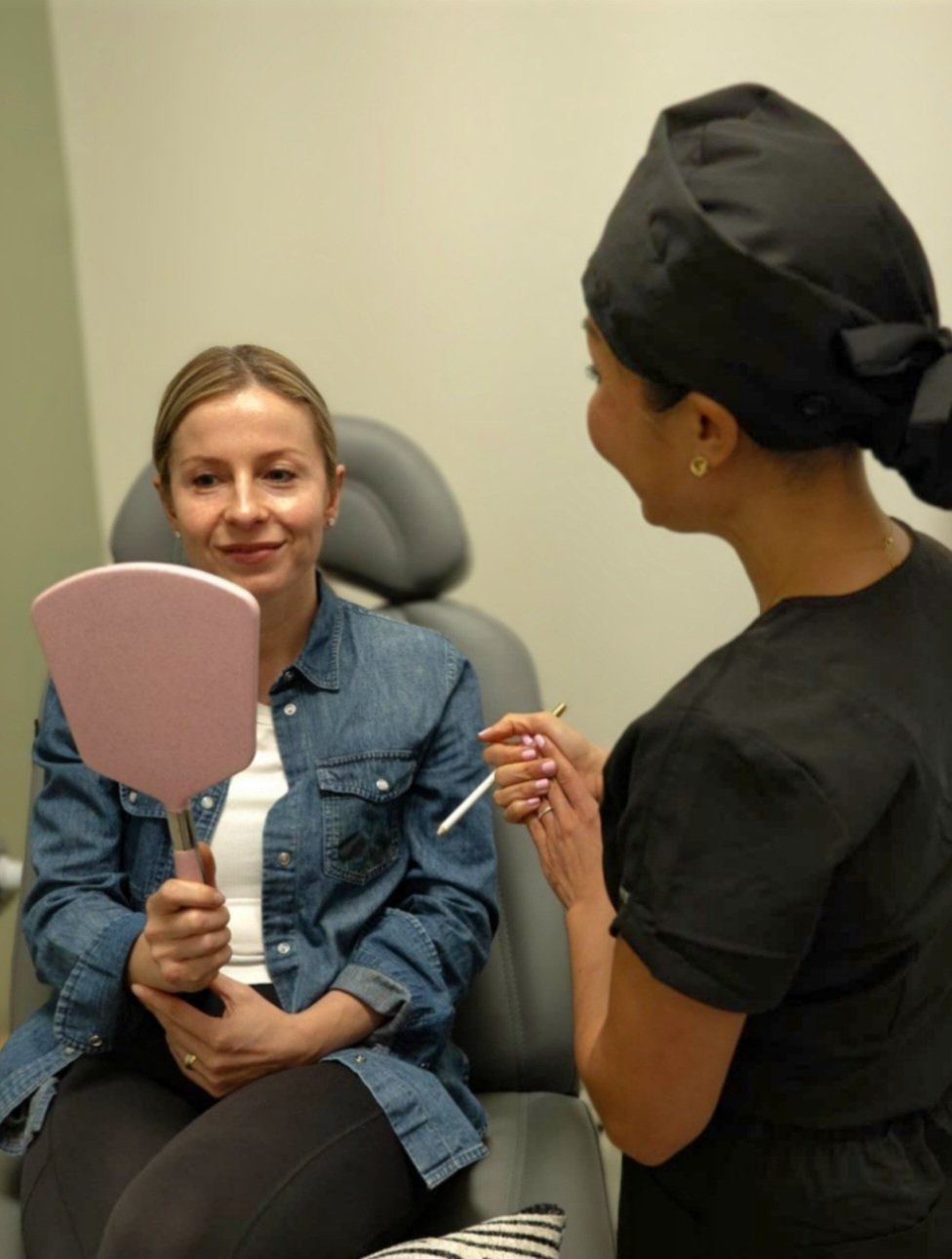
Most visits are short. Here is how a skin tag appointment usually goes.
The tags you want removed are examined to confirm they are benign skin tags and suitable for treatment.
You hear which tags can be treated, which should be left or referred, and what healing may look like.
Cold energy is applied precisely to the selected tag. A short, sharp cold or stinging feeling is normal.
Over the following days the tag dries, darkens or crusts, then sheds. Larger or stubborn tags may need a second visit.
These growths are often confused with one another. Telling them apart is the reason every removal starts with an evaluation.
| Growth | Typical look | Where it appears | Good to know |
|---|---|---|---|
| Skin tag | Small, soft, benign growth of skin | Neck, underarms, eyelids, skin folds | Selected tags can be removed depending on size, location and characteristics |
| Seborrheic keratosis | Raised, rough or waxy, tan to nearly black, looks stuck on | Often develops with age | Noncancerous; sometimes called a skin barnacle |
| Common wart | Rough, raised growth caused by HPV | Hands, fingers, feet and other areas | Some warts need more than one treatment |
| Molluscum contagiosum | Small, round, smooth bump, sometimes with a central dip | Different areas of the body, in children and adults | Contagious viral condition; approach depends on the person |
Removal is elective, so the goal is to treat only what is clearly benign and suitable.
Safety. Treating a skin tag with cold commonly causes brief stinging, then redness, swelling, a small blister or a crust while it heals. Infection, a lighter or darker mark at the site, and scarring are possible, and pigment changes are more likely in darker skin. A tag may not come off completely after one treatment. A growth that is changing, bleeding or uncertain is not removed cosmetically: it needs medical evaluation, which may include a biopsy.
Why patients choose us
Choosing where to have aesthetic treatment is a personal decision. Every visit is led by a certified physician assistant, in a calm clinic in downtown Royal Oak.
Shared by patients on our Google Business Profile. Individual results vary.
Serena is so great, I’m so happy I found her! There’s never a wait, and she spends so much time and extra effort explaining anatomy, each procedure, and expertise on skincare and aging.
Laura DemarcoGoogle review
She’s so gentle and knowledgeable. She explains what works best for you and doesn’t try to sell you on what you don’t need. I can’t say enough good things about her.
Jenna LeighGoogle review
She took her time and explained everything to me as this was my first time getting any type of Botox. She is very professional and personable.
Latoya ColvinGoogle review
Serena is very comforting and will put you at ease if you are nervous about any procedure. She even takes extra steps to follow up with you afterwards to make sure you are well.
Darlita PauldingGoogle review
Something else on your mind? Call us at 248-677-6060 and we will be glad to help.
At Aesthetic Beauty by Serena, PA-C, selected skin tags are removed with targeted cryotherapy after an evaluation confirms they are benign. The cold destroys the tag, which then dries and falls away. Tags that are unsuitable may need a different removal method or a medical referral.
It is not a good idea. Cutting a tag yourself can cause bleeding and infection, and you cannot be sure the growth is actually a skin tag. Having it checked first means anything unusual is identified before it is removed.
Skin tags themselves are benign. The concern is that other growths can look similar. A spot that changes, bleeds, grows quickly or looks different from your other tags should be medically evaluated rather than treated as a cosmetic skin tag.
Eyelids are a common place for skin tags, but the skin there is delicate and close to the eye. Whether an eyelid tag is suitable for removal depends on its size and exact position, and some are better referred elsewhere.
The treated tag usually turns red or darker, may swell or blister slightly, then dries into a small crust that drops off on its own. The skin underneath can look pink at first while it finishes healing.
A tag that has been fully removed does not usually return in the same place, but new skin tags can form over time, especially in areas of friction. Some tags need a second treatment if they did not come off completely.
Treatments that are commonly planned alongside this one.
Invest in yourself today. Up to 16 months no interest for qualified applicants.
Serving Royal Oak, Birmingham, Troy, Bloomfield Hills, West Bloomfield, Beverly Hills, Farmington Hills, Sterling Heights, Commerce Township, Dearborn and surrounding communities.
Skin tag removal is an elective cosmetic procedure offered only for growths evaluated as benign skin tags. It does not replace a skin examination by a physician or dermatologist when a growth is uncertain. Healing and results vary from person to person. The information on this page is educational and is not a diagnosis.