Home/Treatments/Chemical peels
Medical-grade peels in downtown Royal Oak, MI
Fade dark spots, calm breakouts and smooth rough, dull skin with a professional peel matched to your Fitzpatrick skin type, your concerns and the downtime you can allow.
A medical-grade chemical peel is a professional treatment that applies a blend of exfoliating acids to remove dead surface cells and prompt skin renewal. As fresher skin comes through, tone looks more even and texture smoother. Peel strength ranges from light to deep and is selected for your skin type and concern.
Over-the-counter exfoliants work on the very top of the skin. A professional peel is stronger and more controlled: the formula, the number of layers and how long it stays on are chosen for you, and your skin is prepared beforehand and supported afterward. That is what lets a peel address hyperpigmentation, melasma, sun damage, acne and early signs of aging rather than just polishing the surface.
At Aesthetic Beauty By Serena, peels are part of a medical plan. Serena, PA-C, and her aestheticians tailor each treatment, and the clinic can provide prescription-strength medication and medical-grade skincare to prepare your skin and help maintain your result.
The Fitzpatrick scale groups skin from Type I (very fair, always burns, never tans) to Type VI (dark brown to black, never burns). It tells us how sensitive your skin is to the sun and how it is likely to react to specific acids. Deeper skin tones can respond to inflammation by producing extra pigment, so the peel, its strength and your preparation are chosen with that risk in mind.
The clinic’s published peel menu includes the PCA personalized chemical peel, offered as a single treatment or a series of three, and a depigmentation peel program that includes two peels and take-home skincare products for up to three months.
The concern you want to treat largely decides which peel, and which depth, makes sense for you.
Peels can lighten areas of excess pigment and even out patchy tone left by sun exposure.
Hormone-related pigment needs a cautious, pigment-conscious plan, usually with skin preparation before the peel.
Exfoliating acids help unclog pores and calm acne inflammation as part of a wider acne plan.
Discoloration and mild surface texture left by breakouts may improve. Deep, indented scars usually need another treatment.
Peels encourage collagen production, which can soften the look of fine lines and wrinkles.
Removing built-up dead cells reveals a smoother, brighter-looking surface.
Preparation and aftercare matter as much as the peel itself, especially if you are prone to pigmentation.
We review your concerns, skin type, sensitivity, pigment history, current products and the downtime that works for you.
Depending on your skin, you may start topical hydroquinone to lighten pigment, a retinoid to prepare for deeper exfoliation or a topical antibiotic for acne.
The selected peel is applied to clean skin. Expect tingling or warmth while it works.
Moisturize with medical-grade products, use hydrating and calming masks, wear SPF 50 or higher and pause retinol, vitamin C and exfoliants until your skin has healed.
Peel depth decides both what a peel can do and how long recovery takes.
| Depth | Often chosen for | Recovery |
|---|---|---|
| Light peel | First-time peel clients, texture, fine lines and mild acne | Minimal downtime |
| Medium peel | Acne scars, pigmentation, melasma, sun damage and more visible wrinkles | Several days or longer, with noticeable peeling |
| Deep peel | Severe pigmentation, deep wrinkles and extensive sun damage | Often the most recovery time of the three |
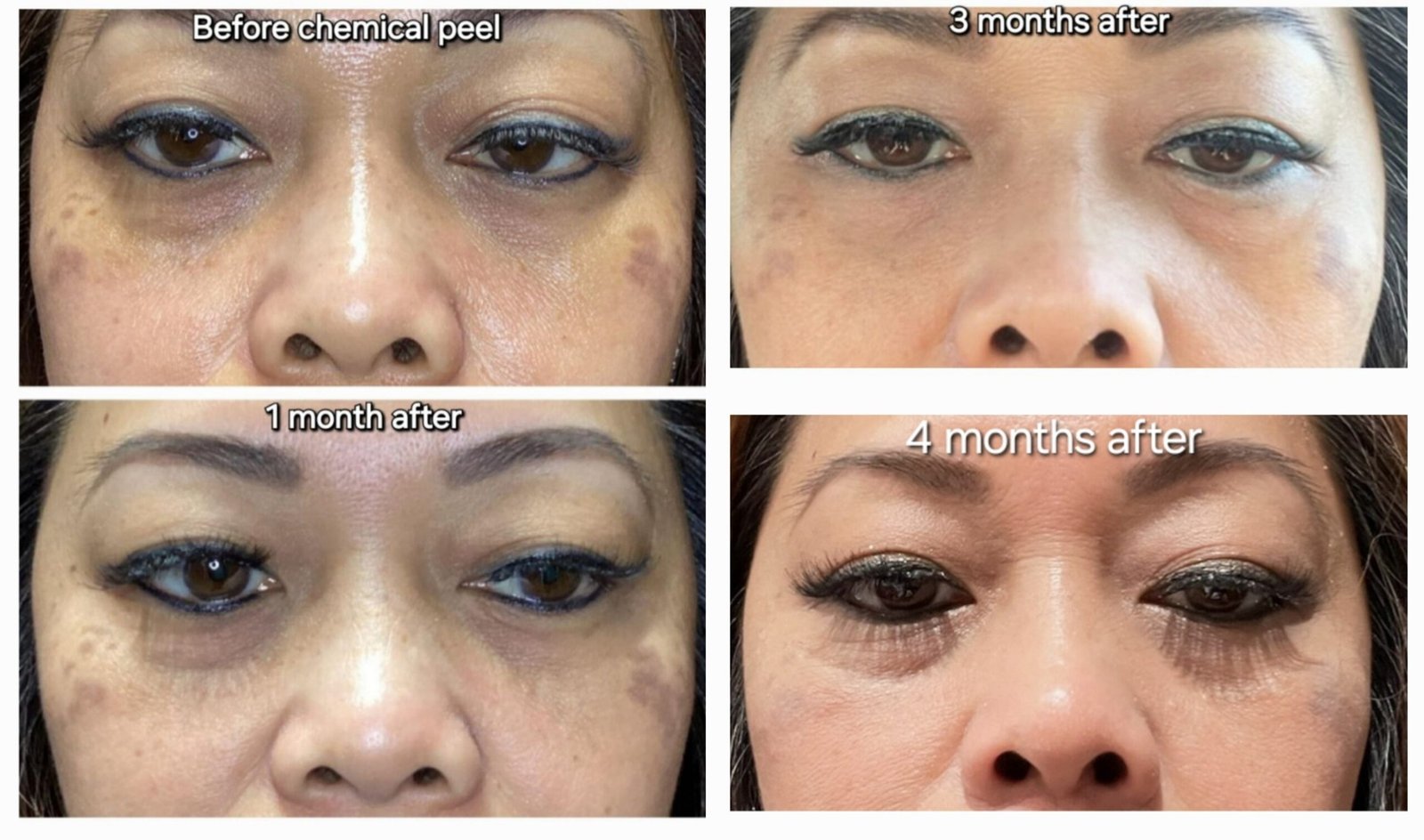
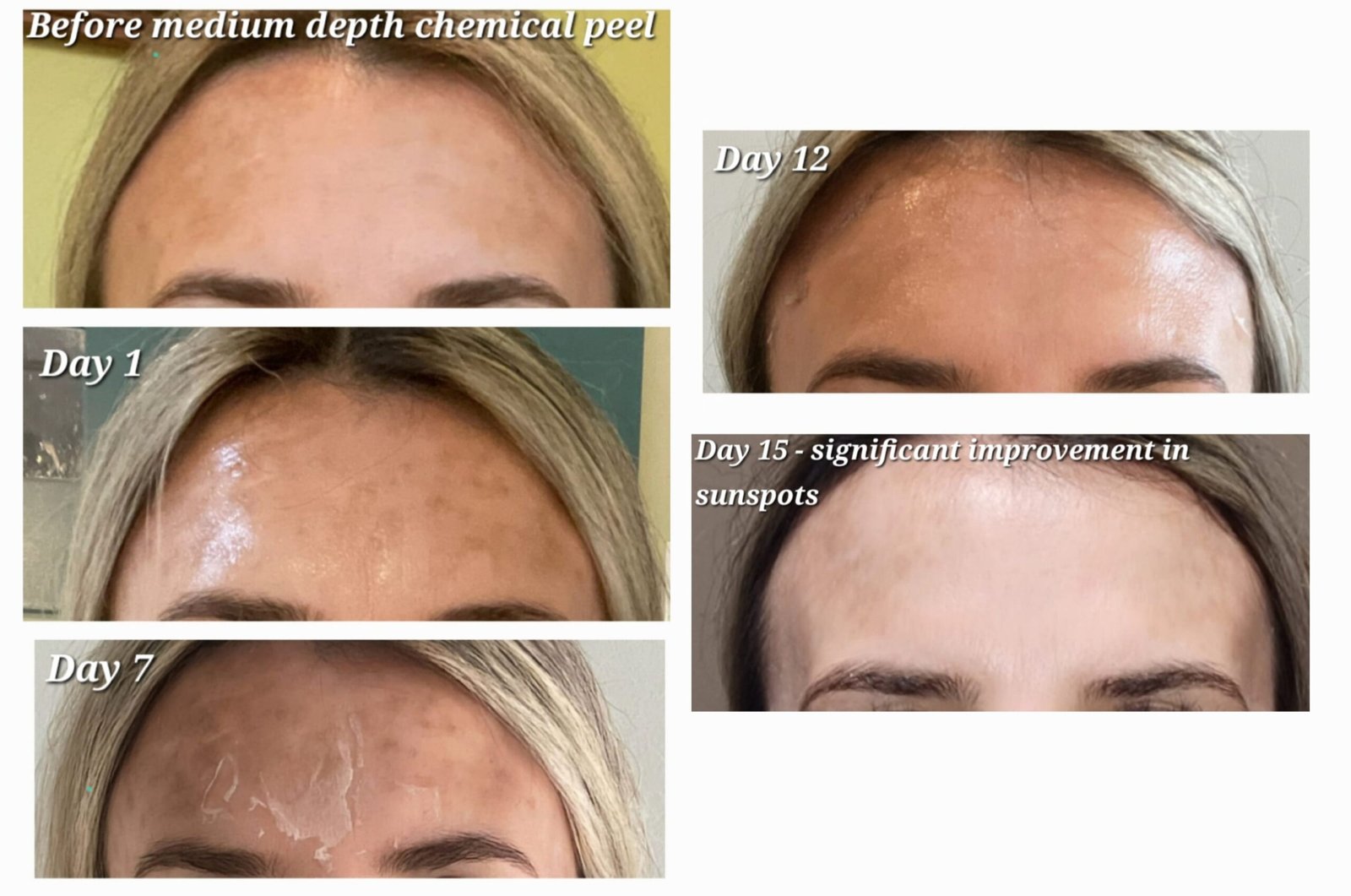
From the clinic’s own gallery: a depigmentation chemical peel during treatment, with before and after photos. Individual results vary.
Most skin types can have some form of peel, but the type and strength must suit your skin and history.
Safety. Expected effects include redness, irritation, peeling, dryness and sensitivity. Temporary darkening or lightening of the skin can occur, and people with deeper skin tones have a higher risk of post-inflammatory hyperpigmentation, which is why skin type and preparation are assessed first. Infection, cold sore flare-ups and, in rare cases, scarring are possible. Sun exposure before your skin has healed raises the risk of new pigmentation.
Why patients choose us
Choosing where to have aesthetic treatment is a personal decision. Every visit is led by a certified physician assistant, in a calm clinic in downtown Royal Oak.
Shared by patients on our Google Business Profile. Individual results vary.
Serena is so great, I’m so happy I found her! There’s never a wait, and she spends so much time and extra effort explaining anatomy, each procedure, and expertise on skincare and aging.
Laura DemarcoGoogle review
She’s so gentle and knowledgeable. She explains what works best for you and doesn’t try to sell you on what you don’t need. I can’t say enough good things about her.
Jenna LeighGoogle review
She took her time and explained everything to me as this was my first time getting any type of Botox. She is very professional and personable.
Latoya ColvinGoogle review
Serena is very comforting and will put you at ease if you are nervous about any procedure. She even takes extra steps to follow up with you afterwards to make sure you are well.
Darlita PauldingGoogle review
Something else on your mind? Call us at 248-677-6060 and we will be glad to help.
A PCA personalized chemical peel is $250 for one treatment or $650 for a series of three. The depigmentation peel program is $800 and includes two peels plus skincare products for up to three months. The clinic confirms your cost at the consultation.
That depends on your skin type, the concern you want to treat, how sensitive your skin is, your pigmentation history, the products you use and how much downtime you can take. A consultation is needed to choose the peel and its strength.
Selected peels can be suitable for deeper skin tones. Because darker skin is more prone to pigment changes after inflammation, the approach is conservative: careful peel selection, pigment-conscious preparation beforehand and strict sun protection afterward.
Not always. Some peels cause little visible flaking, while more intensive ones produce obvious peeling for several days. A lack of visible peeling does not mean the treatment failed, because the skin can still be renewing beneath the surface.
Light peels generally involve minimal downtime, and many people return to normal plans straight away. More intensive peels can need several days to more than a week of recovery, so we time your treatment around work and events.
Sometimes it helps a lot. To lower the risk of pigment problems and improve results, we may recommend a period of medical-grade skincare or prescription products such as hydroquinone, a retinoid or a topical antibiotic before your peel.
Avoid picking flaking skin, sun exposure without SPF 50 or higher, and products containing retinol, vitamin C or exfoliating acids until your skin has fully healed. Use gentle, hydrating products and the calming masks we recommend.
Treatments that are commonly planned alongside this one.
Invest in yourself today. Up to 16 months no interest for qualified applicants.
Serving Royal Oak, Birmingham, Troy, Bloomfield Hills, West Bloomfield, Beverly Hills, Farmington Hills, Sterling Heights, Commerce Township, Dearborn and surrounding communities.
Chemical peels are cosmetic skin procedures that require a skin evaluation and informed consent. Licensed providers may use FDA-approved products off-label when clinically appropriate, and this is discussed with you first. Peel prices shown are those published by the clinic and are confirmed at booking. Outcomes vary with skin type and aftercare. This information supports, and does not replace, a personal consultation.