
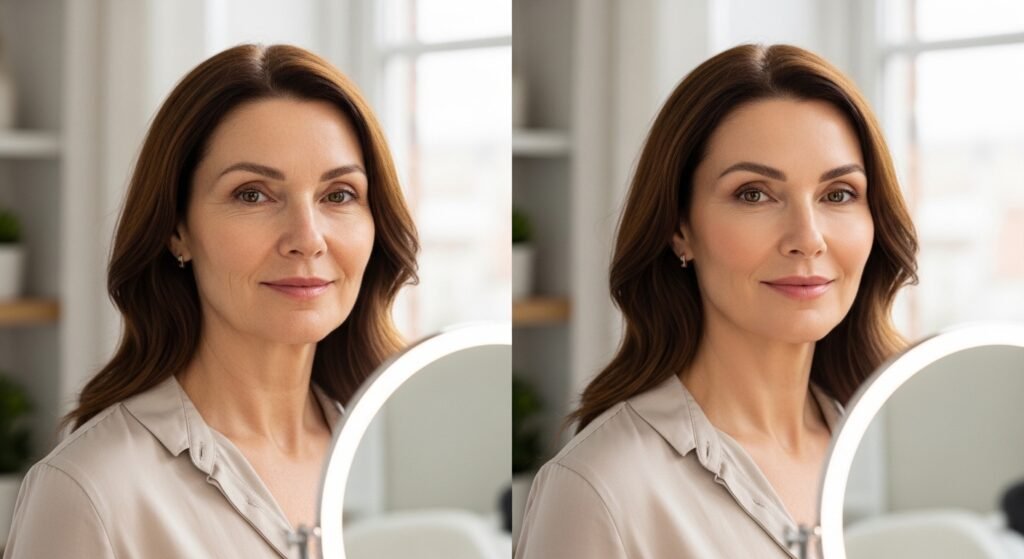
A facelift can make a person look younger, but there is no exact number for everyone. In many cases, people may look around four to six years younger after a facelift. Some may look a little more refreshed, while others may see a bigger change. It depends on skin quality, facial structure, age, sun damage, and how the face has aged over time. At Aesthetic Beauty By Serena, PA-C, the goal is a natural, refreshed look that still feels like you.
A facelift often helps a person look about four to six years younger. That is a helpful average, but it is not a promise. Some people may feel they look much more refreshed, while others may notice a softer and more subtle result. A good facelift does not try to make someone look unreal. It aims to create smoother lines, better definition, and a younger look that appears natural.
Why is the answer different for every face
Every face ages in its own way. Some people lose cheek fullness early. Others develop loose skin around the jawline, deeper folds around the mouth, or sagging in the neck. Genetics, smoking, stress, sleep, and sun exposure all affect how quickly the face changes. That is why two people of the same age can look very different and need very different treatment plans.
A facelift mainly improves sagging and tissue descent. It lifts areas that have dropped over time, especially in the lower face and neck. But it does not fix every surface issue. If the skin has a rough texture, uneven tone, or visible sun damage, extra care may still be needed. That is why many people combine lifting with treatments that improve skin quality, too.
What does a facelift improve best
A facelift is often best for the lower half of the face. It can improve jowls, soften heaviness near the mouth, tighten loose skin, and create a cleaner jawline. It may also help the neck look smoother and firmer. These changes often make the face look less tired and more youthful. For many people, better Lifting is what gives the biggest visible age change.
It also helps restore balance. As the face ages, tissue can shift downward and create a heavier appearance. A facelift can move that tissue back into a better position. This can improve facial shape without making the face look stiff. When done well, the result is not about looking “done.” It is about looking fresher, more rested, and more defined.
What a facelift does not do
A facelift does not erase every line on the face. It can soften some folds by lifting tissue, but it does not treat all Wrinkles. Lines caused by muscle movement, such as forehead lines or crow’s feet, may respond better to Botox. Very fine lines caused by sun damage or thinning skin may need a different kind of treatment. This is why many people need more than one approach for full facial rejuvenation.
It also does not fully treat concerns like pigmentation, acne scars, enlarged pores, or dull skin. Those issues come more from the skin surface than from sagging tissue. A person can have a nice lift and still have uneven tone or roughness. That is why skin treatments such as Laser, Microneedling, Hydrafacial, or Peels may still play an important role in the final result.
Why non-surgical options matter too
Not everyone needs surgery right away. Some people are better suited for a non surgical facelift treatment plan that supports the face in a softer way. This may include Botox for movement lines, Fillers for lost volume, and collagen-focused treatments for skin quality. These options do not create the same lift as surgery, but they can help a person look fresher and more rested with less downtime.
A liquid facelift treatment may be useful when the main issue is volume loss rather than heavy sagging. Fillers can support areas like the cheeks or temples and improve facial balance. Botox can reduce muscle pull in certain parts of the face. When used carefully, these treatments may offer a mild lifting effect. They work best when the face still has good skin support and only early signs of aging.
When a facelift may be the better choice
There comes a point when adding more filler will not solve the real issue. If the cheeks have dropped, the jawline has become heavy, and the neck has loose skin, the face may need repositioning rather than just added volume. In that case, a facelift may give a more natural result than trying to keep filling areas that are already sagging. Good treatment planning matters more than following trends.
A facelift may be the better option when a person wants stronger change in the lower face and neck. It can also help when someone feels they still look tired or older even after trying injectables and skincare. This does not mean surgery is for everyone. It means the face should be assessed honestly. The best treatment is the one that matches the actual cause of aging.
Skin quality still changes how young you look
Looking younger is not only about tight skin. It is also about smoothness, tone, and healthy glow. A person may have a good facial shape but still look older if the skin is dull, dry, rough, or uneven. That is why strong Collagen support and good skincare habits matter so much. Youthful skin usually reflects light better and looks softer, brighter, and healthier.
This is where treatments like Microneedling, PRP, Exosomes, Resurfacing, and medical-grade skincare can help. They may support smoother texture, better tone, improved acne scars, and stronger skin quality over time. Hydrafacial and Dermaplaning can also help the skin look cleaner and brighter. These treatments are not facelifts, but they can make the face look more complete and refreshed when paired with the right lifting plan.
Signs the face may need lifting more than filling
Some people keep trying to fix aging with filler when the real problem is tissue descent. If the lower face looks heavy, the jawline is blurred, or the neck has visible looseness, adding more product may not help much. In some cases, it can even make the face look puffy. Better Contour often comes from lifting sagging tissue, not just adding more volume on top of it.
- jowls that soften the jawline
- loose skin under the chin
- deeper folds caused by sagging tissue
- a tired lower face even after injectables
- a fuller but less defined look from too much filler
These signs do not replace a proper consultation, but they show why diagnosis should come first.
A photo-friendly moment: light, shape, and the jawline
One of the clearest changes after a facelift is how the lower face catches light. A smooth jawline and firmer neck often create cleaner shadows and a more youthful outline. This matters in photos because the eye notices shape very quickly. Even when people cannot explain what changed, they often notice that the face looks more rested, smoother, and more balanced.
This is one reason why a natural result matters so much. A younger-looking face is not always the tightest one. It is often the one with better harmony between the cheeks, jawline, neck, and skin. In facial aesthetics, subtle improvement often looks better than dramatic change. The best results usually make other people say, “You look great,” not “What did you have done?”
How long will the younger look last
A facelift does not stop aging, but the younger look can last for years. The face will continue to age, but it often ages from a better starting point after lifting. That means a person may still look younger than they would have without the procedure, even several years later. Long-term results depend on the type of aging, skin condition, lifestyle, and how well the person cares for the result.
Daily habits make a big difference. Sun exposure, smoking, major weight changes, and poor skincare can shorten the fresh look. Healthy routines can help support it. Good hydration, steady weight, sun protection, quality skincare, and maintenance treatments may all help. This is where a thoughtful antiaging plan becomes valuable. It is not only about one procedure. It is about protecting the result over time.
How supportive treatments can help maintain results
Many people benefit from combining facelift-style goals with ongoing skin support. A natural facelift treatment plan may include Botox to soften movement lines, Fillers in select areas, or treatments that support collagen and skin renewal. Microneedling, PRP, Exosomes, and Laser options may help improve texture and glow after the face has already been lifted or refreshed.
Hydrafacial, Dermaplaning, and gentle skincare support can also help maintain brightness and smoothness. Peels may help with mild pigmentation and dullness. These treatments do not replace true lifting when sagging is advanced, but they can help maintain a healthier, more youthful appearance. A complete plan often gives the best long-term result because it cares for both structure and skin.
What this means for patients at Aesthetic Beauty By Serena, PA-C
At Aesthetic Beauty By Serena, PA-C, the better question is often not just how many years a facelift can take off. The better question is what is making the face look older in the first place. For some people, it is sagging. For others, it is volume loss, poor skin tone, dullness, scars, or dryness. Once the real cause is clear, the right treatment plan becomes much easier to build.
For most people, the honest answer is this: a facelift may help you look around four to six years younger, and sometimes more refreshed overall when paired with the right skin treatments. Botox, Fillers, Microneedling, Laser, Resurfacing, Hydrafacial, Dermaplaning, PRP, Exosomes, and strong skincare can all support that result when used wisely. The goal is safe, natural-looking rejuvenation that improves confidence without taking away what makes your face your own.