

Reviewed by: Aesthetic Beauty by Serena Provider Team
Last updated: June 2026
Location: Royal Oak, Michigan
Disclaimer: This article is educational only and is not medical advice. Botox treatment must be discussed with a qualified provider who can review your goals, health history, facial anatomy, and treatment suitability.
Botox results usually last around 3 to 4 months, but the timeline is not identical for every patient. Treatment area, muscle strength, dose, metabolism, activity level, and injector technique all influence how long the smoothing effect remains visible.
Most patients do not see full results on day one. Botox often starts working within a few days, then settles gradually. Many providers assess results around week 2 because movement, symmetry, and softness are easier to evaluate at that stage.
At Aesthetic Beauty by Serena PA-C, a trusted Medical Spa in Royal Oak, patients can review their expected Botox results timeline during a personalized consultation.
Quick Answer Box
How long does Botox usually last?
Many patients see results for about 3 to 4 months, though individual timing varies.
When does Botox start working?
Early softening can appear within a few days. Results build gradually.
When should results be checked?
Week 2 is often a practical time to review results, though individual responses can continue to vary.
What affects Botox duration?
Muscle strength, dose, treatment area, metabolism, activity level, prior treatment history, and injector technique all matter.
Key takeaway: Do not judge your final result too early. Keep expectations conservative and follow your provider’s timeline.
What Is Botox?
Botox is a neuromodulator treatment that temporarily relaxes selected facial muscles. It is commonly used to soften movement-related lines, including forehead lines, frown lines, and crow’s feet.
For official product information, refer to the BOTOX® Cosmetic manufacturer’s page.
At Aesthetic Beauty by Serena PA-C, Botox is part of the clinic’s broader aesthetic services for patients who want a natural-looking plan. The goal is not to erase expression. The goal is to soften strong movement while keeping facial balance.
Patients searching for Botox in Royal Oak should focus on more than the product name. A good plan must account for brow position, muscle strength, expression patterns, and the level of movement the patient wants to keep.
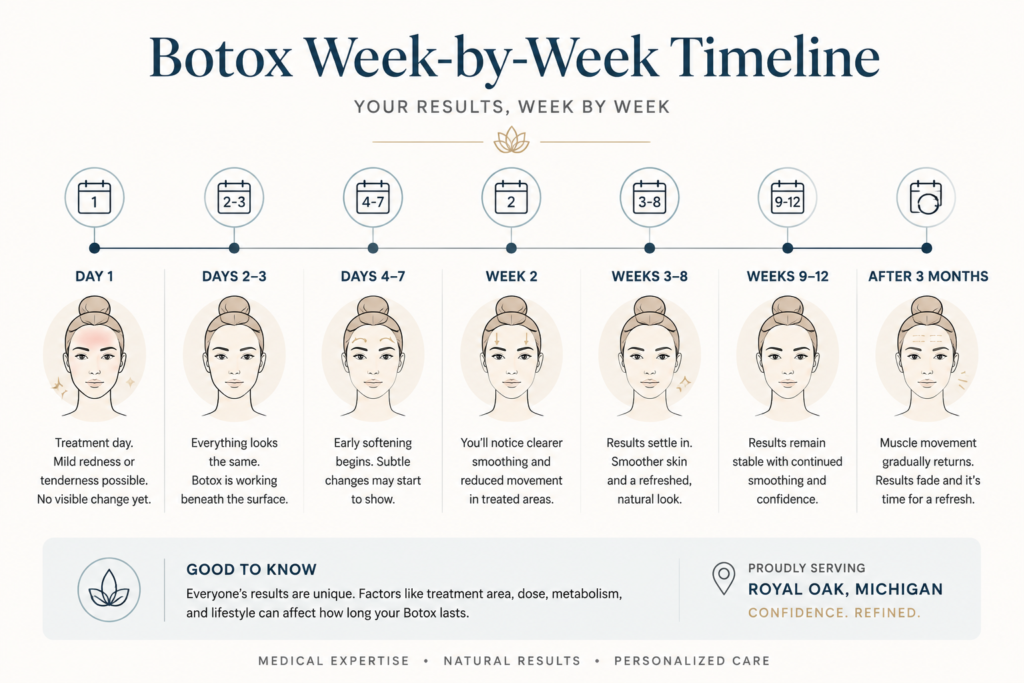
What to Expect Week by Week After Botox
A Botox week by week timeline helps patients understand what is commonly expected after treatment. The exact pace can differ, but most people follow a general pattern from early settling to peak effect and gradual wear-off.
Day 1
On the first day, you may see small injection marks, mild redness, or slight swelling. These changes are often temporary.
Full wrinkle softening should not be expected right away. Botox needs time to affect muscle movement. Follow the aftercare instructions exactly as given by your provider.
Days 2–3
Some patients begin to notice early softening. Others see little change at this stage, which can still be normal.
Avoid checking your face too often. Small changes can feel more obvious when you are watching every movement closely.
Days 4–7
This is when many patients notice clearer movement changes. Forehead movement may feel softer, frown lines may look less deep, and crow’s feet may relax slightly when smiling.
Results are still settling. One side can appear to respond faster before the final result looks more balanced.
Week 2
By week 2, Botox is often easier to evaluate, though individual results can continue to vary. Lines may look smoother, and treated movement may feel more controlled.
This is a common time for a follow-up when your provider recommends one. Do not add more product too early without professional guidance.
Weeks 3–8
This is often the most stable period. Movement is usually softer, and results may look polished without appearing stiff.
Natural results should still allow expression. You should look rested, not frozen.
Weeks 9–12
Movement may begin returning during this stage. This is expected because Botox is temporary.
Patients with stronger muscles, faster metabolism, or high activity levels may notice movement returning sooner than others.
After 3 Months
After 3 months, many patients begin planning maintenance. Some wait longer. Others prefer to schedule before full movement returns.
Your provider should guide timing based on your results, goals, and facial movement.
Botox Week-by-Week Timeline Table
|
Time Period |
What You May Notice |
Is It Normal? |
What to Do |
|
Day 1 |
Mild redness, tiny bumps, or no visible change |
Yes |
Follow provider’s aftercare instructions |
|
Days 2–3 |
Early softening or little change |
Yes |
Do not judge the final results yet |
|
Days 4–7 |
Movement starts to soften more clearly |
Yes |
Watch gradual changes without overchecking |
|
Week 2 |
Results look more settled, though the response varies |
Yes |
Attend follow-up when recommended |
|
Weeks 3–8 |
Smoother, more stable-looking result |
Yes |
Use consistent photos if tracking results |
|
Weeks 9–12 |
Gradual return of movement |
Yes |
Plan maintenance when appropriate |
|
After 3 months |
Results may fade more noticeably |
Yes |
Schedule a consultation for next steps |
What Affects How Long Botox Lasts?
Botox duration depends on several factors. No provider can promise the exact same timeline for every patient.
Treatment Area
Some areas move more than others. Forehead lines, frown lines, and crow’s feet can each respond differently because the muscles are used in different ways.
Muscle Strength
Stronger muscles may regain movement sooner. Patients who frown, squint, or raise their brows often may need a more tailored plan.
Dose
Dose affects both result and feel. A conservative dose may preserve more movement. A higher dose may last longer in some cases, but it can also increase the risk of a heavy or frozen look. The plan must match the goal.
Metabolism and Activity Level
Some people process Botox faster. High activity levels, active facial movement, and individual biology can influence how quickly the effect wears off.
Prior Treatment History
Patients who receive Botox consistently may notice their movement patterns change over time. This does not guarantee longer results, but it can support a steadier maintenance plan.
Injector Technique
Placement matters. A skilled injector must understand muscle pull, facial balance, brow position, and natural expression. This is why choosing a trusted Royal Oak medical spa matters.
Signs of Normal Botox Progression
Normal Botox progression is gradual. Day 1 is usually too early to judge. The first week often brings small changes, and week 2 is when results tend to look more settled.
Common signs include a softer frown, less forehead pull, smoother expression lines, and movement that feels controlled but not completely absent.
Botox softens movement-related lines. It does not replace lost facial volume, resurface skin texture, or remove every line. A good result should look balanced, refreshed, and still natural.
When to Contact the Provider
Check with your provider when something feels unclear, uncomfortable, or outside the expected timeline. This section is not meant to create worry. It is meant to help patients know when professional guidance is appropriate.
Contact the clinic when your results still look uneven after the usual settling period, when one area feels heavier than expected, or when you are unsure whether a follow-up is needed. You should also reach out before scheduling another treatment if your results wore off sooner than expected.
Contact a medical professional promptly for severe or urgent symptoms, such as trouble breathing, swallowing, speaking, or sudden symptoms that feel serious. Do not try to self-correct Botox concerns at home.
A responsible med spa Royal Oak provider should explain aftercare, expected timing, follow-up options, and what changes should be reviewed in person.
Why Choosing a Medical Spa in Royal Oak Matters
A good Botox timeline starts before the injection. It starts with the consultation, where your provider studies movement, symmetry, dose needs, and your comfort with expression.
A trusted Medical Spa in Royal Oak should focus on consultation quality, facial movement assessment, careful dosing, realistic expectations, and natural-looking results.
At Aesthetic Beauty by Serena, patients can start with a complimentary skin analysis to discuss goals, concerns, and treatment timing before making a decision.
For anyone searching for a Medspa Royal Oak, Michigan, or an aesthetic clinic in Royal Oak, local care gives you an in-person assessment, personalized planning, and follow-up guidance.
Before and After Results and Timeline Documentation
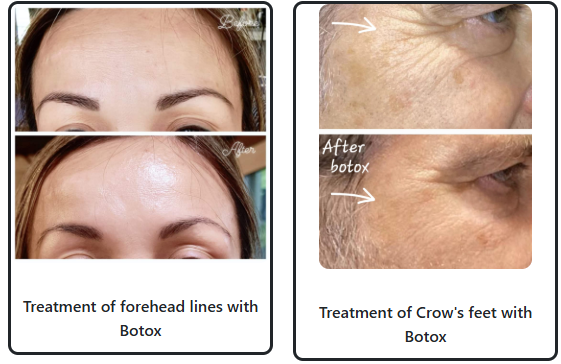
Before and after photos help patients understand what Botox can realistically do, a strong results gallery should show balanced expressions, natural softening, and consistent photo angles.
The clinic should include only real treatment examples from its own work. Do not use stock images as proof of results.
A useful case study format can include:
Concern: forehead lines or frown lines
Goal: softer movement without a frozen look
Treatment: Botox plan selected after consultation
Timeline: day 1, week 1, week 2, and month 3
Result note: movement appeared softer while expression stayed natural
Disclaimer: individual results vary
Patients can also read patient testimonials to understand the clinic experience, communication style, and patient confidence.
Conclusion: How Long Should You Expect Botox to Last?
Most patients plan Botox maintenance around the 3 to 4 month range, but the right schedule depends on individual response. The first week is usually a gradual change period. Week 2 is often when results are easier to judge. Weeks 3 to 8 are commonly the most stable stage. After 3 months, many patients begin considering their next visit.
The best Botox plan should keep the result natural, the timing realistic, and the treatment conservative when needed.
If you are looking for Botox in Royal Oak, book a complimentary skin analysis at Aesthetic Beauty by Serena. A personalized consultation can help you understand your expected timeline, maintenance plan, and best path toward natural-looking results.

FAQ Section
- How long does Botox last the first time?
Botox results commonly last around 3 to 4 months for first-time patients, but results vary. Some first-time patients notice movement returning sooner because their muscles are strong or the first dose is conservative. - When does Botox start working?
Botox often starts working within a few days. Many patients notice visible softening around days 3 to 7, with results commonly assessed around week 2. - Why does Botox wear off faster for some people?
Botox can wear off faster because of muscle strength, metabolism, treatment area, dose, activity level, or individual response. Injector technique also affects the overall result. - Can Botox last longer with repeat treatments?
Repeat treatments can support a steady maintenance routine. Some patients notice movement patterns soften over time, but a longer duration must not be assumed for everyone. - What happens when Botox wears off?
Movement gradually returns. Lines may slowly become more visible again. This is expected because Botox is temporary. - How often should I get Botox?
Many patients schedule Botox every 3 to 4 months. Your provider should guide the schedule based on your results, goals, and facial movement. - Should I get a Botox touch-up at 2 weeks?A 2-week follow-up may be appropriate when your provider recommends it. Do not add more product without professional guidance.