
Disclaimer: This article is educational only and is not medical advice. PRP and PRF treatment suitability, risks, expected outcomes, and treatment planning should be discussed with a qualified provider.
PRP and PRF are regenerative aesthetic treatments made from a small sample of your own blood. PRP means platelet-rich plasma. PRF means platelet-rich fibrin. Both are used in regenerative aesthetics for concerns such as skin quality, under-eye appearance, and hair restoration, but they are processed differently and may fit different goals.
PRF is often described as a newer-generation option because it contains a fibrin matrix that can support a slower release profile. That does not make PRF universally better. PRP may be a strong choice for broader skin or scalp treatments, while PRF may be preferred for certain delicate areas.
At Aesthetic Beauty by Serena PA-C, a trusted Medical Spa in Royal Oak, patients searching for PRP Royal Oak, PRF Royal Oak, or an aesthetic clinic in Royal Oak can review options through a personalized consultation.
Quick Answer Box
What is PRP?
PRP is platelet-rich plasma. It is a fluid platelet concentrate used to support skin rejuvenation, scalp treatments, and overall tissue-quality improvement.
What is PRF?
PRF is platelet-rich fibrin. It has a fibrin-rich structure that may support a slower, more gradual release profile.
Is PRF more advanced than PRP?
PRF is often considered a newer-generation platelet treatment, but “more advanced” does not always mean better for every patient or area.
Which one is right for you?
The best option depends on your treatment goal, skin quality, under-eye anatomy, hair concerns, comfort level, and provider recommendation.
PRP vs PRF: What Is the Difference?
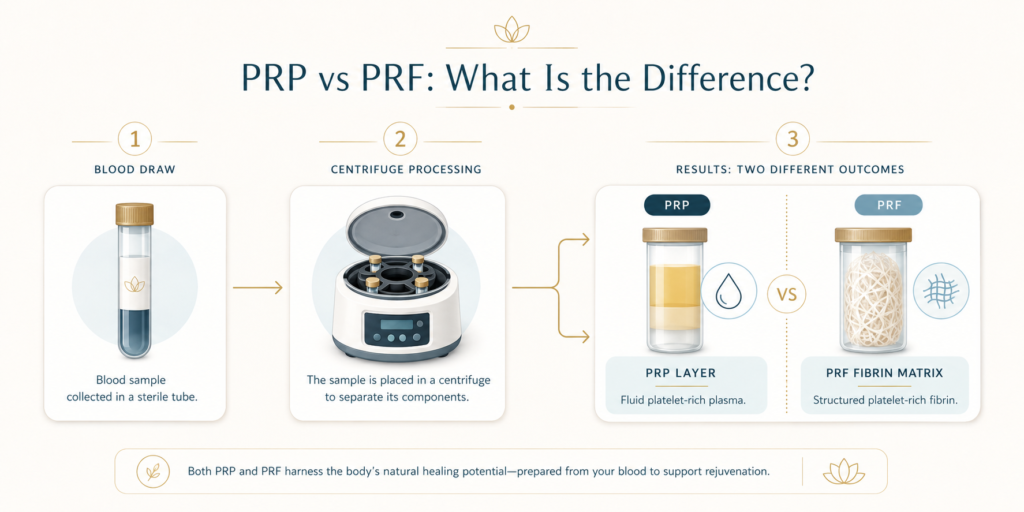
PRP and PRF both start with a blood draw. The blood is processed in a centrifuge to separate useful components from red blood cells and other layers. The difference comes from processing speed, preparation method, final texture, and how the material behaves after treatment.
PRP is typically thinner and more fluid. It is commonly used across larger areas, such as the scalp or full-face skin treatments. Providers may also use it with microneedling or other skin-focused plans.
PRF is usually thicker because it contains a fibrin matrix. That structure may help hold platelets and related signaling proteins in place longer, depending on the preparation method. This is one reason PRF is often discussed for delicate zones such as the under-eyes.
For broader patient-safety context around regenerative medicine claims, review the FDA’s patient guidance.
The simple difference: PRP is usually more fluid, while PRF is more structured. Both require careful handling, clean preparation, and thoughtful placement.
PRP vs PRF Comparison Table
Treatment | Best For | How It Works | Look and Feel | Notes |
PRP | Skin rejuvenation, scalp support, texture concerns, microneedling support | Blood is processed to concentrate platelet-rich plasma | Usually thinner and more fluid | Often chosen for broader treatment areas |
PRF | Under-eye rejuvenation, delicate areas, gradual regenerative support | Blood is processed to create platelet-rich fibrin with a fibrin matrix | Usually thicker and more structured | May support a slower release profile in selected plans |
Both | Regenerative aesthetics using your own blood components | Support natural repair signals in treated areas | Gradual, subtle improvement | Results vary by person and treatment plan |
Which One Is Right for You?
Choosing between PRP and PRF should start with the concern, not the trend.
For general skin rejuvenation, PRP may be chosen when the goal is glow, texture support, or overall skin quality. It can be useful across larger areas and may fit patients who want a broad regenerative approach.
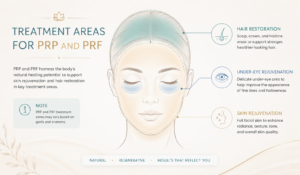
For under-eye rejuvenation, PRF is often discussed because the under-eye area is thin, delicate, and sensitive to product choice. PRF may be considered when a provider wants gradual support rather than a traditional filler-style approach.
For hair restoration, PRP is commonly used in scalp-focused plans. PRF may also be considered depending on the provider’s protocol, thinning pattern, and treatment goals.
Age, skin quality, under-eye structure, hair density, downtime tolerance, and comfort with gradual results all matter. A strong consultation at a Royal Oak medical spa should look at anatomy first and treatment preference second.
PRP Explained
PRP, or platelet-rich plasma, is made by drawing a small amount of blood and processing it to isolate a platelet-rich portion. The final product is usually fluid and can be placed into or applied over targeted areas, depending on the treatment plan.
In aesthetic medicine, PRP is often used for:
- Dull or tired-looking skin
- Texture support
- Microneedling enhancement
- Scalp and thinning-hair protocols
- Gradual skin-quality improvement
PRP does not work like dermal filler. It is not intended to create immediate volume in the same way filler can. Patients who choose PRP usually want a more gradual approach that supports skin or scalp quality over time.
Because results develop slowly, a series of sessions may be recommended. The number of treatments depends on the concern, the area, and the patient’s response.
PRF Explained
PRF, or platelet-rich fibrin, also comes from a patient’s own blood. The key difference is that PRF is processed in a way that allows a fibrin structure to form.
That fibrin matrix gives PRF a different texture and release pattern. Some providers consider PRF a newer-generation platelet option because it may stay more localized and release growth factors more gradually in selected treatment areas.
PRF may be used for:
- Under-eye rejuvenation
- Crepey-looking skin in delicate areas
- Gradual skin-quality support
- Regenerative facial treatment planning
- Selected scalp or hair protocols
PRF is not right for every under-eye concern. Puffiness, deep hollowing, pigmentation, skin laxity, and vascular shadowing can require different plans. A careful provider should evaluate the cause before recommending PRF, PRP, filler, laser, or another option.
Best Use Cases: Skin, Under-Eyes, and Hair
Skin Rejuvenation
For skin rejuvenation, PRP is often selected for broader treatment areas. It may be paired with microneedling or used in plans focused on texture, tone, and overall skin quality.
PRF may also be considered for skin, especially when a provider wants a more structured regenerative material. The decision depends on the treatment depth, skin condition, and desired pace of improvement.
Under-Eye Rejuvenation
For under-eye rejuvenation, PRF is often preferred by providers who want a gradual approach in a delicate area. It may be considered for thin-looking skin, mild hollowness, or crepey texture.
PRP can still be useful in some under-eye plans. The right choice depends on what is causing the concern. Under-eye shadows are not all the same, and they should not be treated with a one-size-fits-all plan.
Hair Restoration
For hair restoration, PRP is commonly used in scalp protocols. It may support a broader treatment pattern across thinning areas.
PRF may be considered in some scalp plans, but neither PRP nor PRF should be presented as a guaranteed hair regrowth solution. Hair response can be influenced by genetics, hormones, scalp health, shedding pattern, treatment consistency, and overall biology.
What Affects PRP and PRF Results?
Several factors shape the final outcome.
Blood draw and processing matter because timing, equipment, preparation method, and handling can affect the final product.
Injector technique matters because placement, depth, and treatment pattern influence comfort and results.
Treatment area matters because facial skin, under-eyes, and scalp tissue respond differently.
Skin or scalp condition matters because texture changes, thinning hair, pigmentation, laxity, and inflammation can affect what is realistic.
Number of sessions matters because regenerative treatments are usually gradual.
Aftercare matters because the treated area needs time to settle.
Patient biology matters because healing response, platelet quality, age, lifestyle, and overall health can influence results.
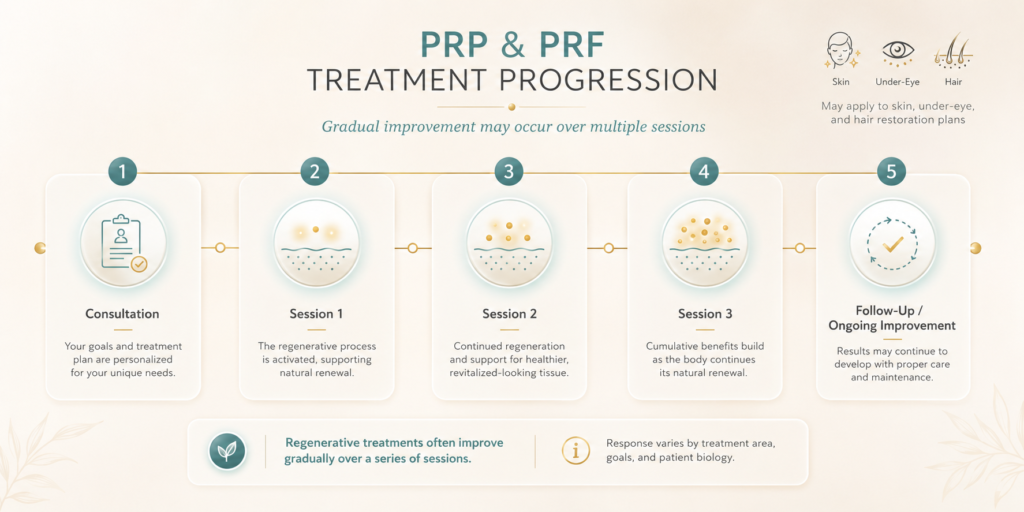
This is why a med spa Royal Oak consultation should include goals, timeline, treatment area, and realistic expectations before a plan is chosen.
Before and After Results and Case Study Framework
Before-and-after examples can help patients understand what PRP and PRF may realistically achieve. A helpful results gallery should show real clinic examples, consistent lighting, clear angles, and honest result notes.
The clinic should use only real patient examples from its own work. Do not use stock images as proof of results.
A useful case study format can include:
Concern: under-eye texture, thinning hair, or dull skin
Goal: gradual improvement without an overdone look
Treatment: PRP or PRF selected after consultation
Plan: number of sessions and spacing
Timeline: baseline, mid-series, and follow-up photos
Result note: visible changes documented where present
Disclaimer: individual results vary
Patients can also review patient testimonials to understand the clinic experience, communication style, and patient confidence.
Local Trust: Why Choose a Medical Spa in Royal Oak?
Choosing the right provider matters with PRP and PRF because the treatment involves blood draw, preparation, placement, and follow-up planning.
A trusted Medical Spa in Royal Oak should focus on:
- Personalized consultation
- Careful preparation
- Clear treatment planning
- Realistic expectations
- Experience with regenerative procedures
- Natural-looking, gradual outcomes
- Follow-up guidance
At Aesthetic Beauty by Serena PA-C, patients can start with a complimentary skin analysis to discuss skin quality, under-eye concerns, thinning hair, and treatment options.
For anyone searching for Medspa Royal Oak Michigan, PRP Royal Oak, or PRF Royal Oak, local care allows the provider to assess your concerns in person and recommend a plan that fits your anatomy, goals, and comfort level.
Conclusion: Is PRP or PRF Better?
PRP and PRF are both regenerative aesthetic treatments made from your own blood. PRP is usually more fluid and is often used for broader skin or scalp plans. PRF is usually more structured and is often discussed for delicate areas such as the under-eyes.
PRF may be considered more advanced in certain treatment plans, but it is not automatically better for everyone. The best choice depends on your treatment area, skin quality, hair concerns, anatomy, and provider recommendation.
To explore PRP at Aesthetic Beauty by Serena PA-C, book a complimentary skin analysis. A personalized consultation can help you understand which regenerative option may best support your skin, under-eye, or hair goals.
FAQ Section
What is the difference between PRP and PRF?
PRP is platelet-rich plasma, and PRF is platelet-rich fibrin. PRP is usually thinner and more fluid, while PRF contains a fibrin matrix that may support a slower release profile.
Which lasts longer, PRP or PRF?
PRF may have a slower release profile because of its fibrin structure, but results vary by person. Longevity depends on treatment area, number of sessions, biology, and provider technique.
Is PRF better than PRP?
PRF is not universally better than PRP. PRF may be preferred for certain delicate areas, while PRP may be preferred for broader skin or scalp treatments.
What can PRP or PRF help with?
PRP and PRF may support skin rejuvenation, under-eye rejuvenation, texture improvement, and hair restoration plans. The best use depends on the concern and treatment suitability.
Does PRP or PRF hurt?
Patients may feel mild discomfort from the blood draw and treatment placement. Comfort level varies, and your provider should explain what to expect before treatment.
How many treatments are usually needed?
Many patients need a series of treatments. The number of sessions depends on the treatment area, concern, response, and provider plan.