
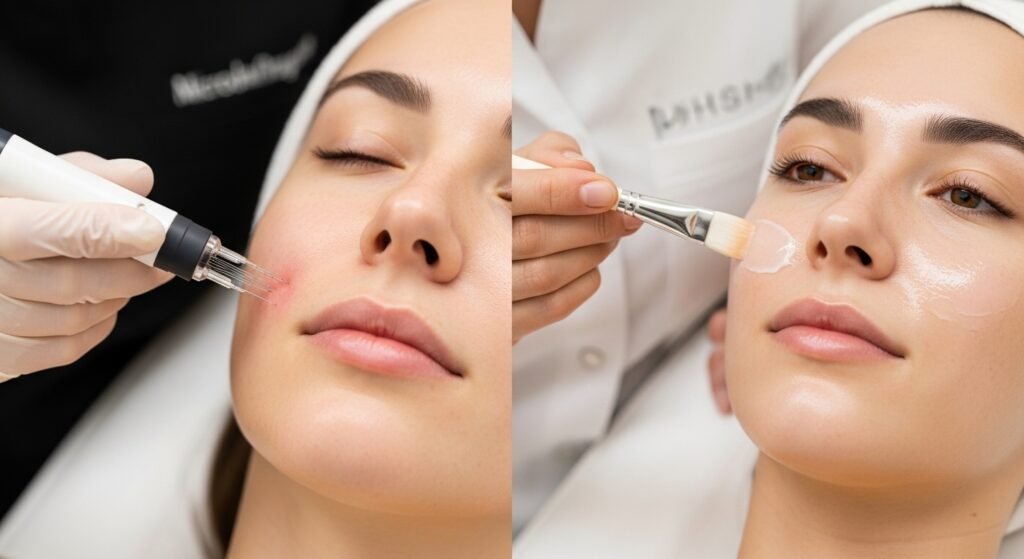
Choosing between Microneedling and chemical peels is not always simple. Both treatments can improve skin tone, texture, and overall glow, but they work in different ways. At Aesthetic Beauty By Serena, PA-C, the right choice depends on your skin goals, your downtime comfort, and the concerns you want to treat most. For some people, microneedling is the better fit. For others, a facial chemical peel may give faster surface results. In some cases, both can play a role in a long-term skincare plan.
What Makes These Treatments Different?
Microneedling uses very fine needles to create tiny, controlled channels in the skin. This process helps trigger your body’s healing response and supports new Collagen production. Chemical peels work by placing a solution on the skin to remove damaged outer layers. That helps reveal fresher skin underneath and can improve dullness, uneven tone, acne marks, and rough texture. Both treatments can target common concerns, but they do it through different methods.
How Microneedling Helps the Skin
Microneedling is often chosen for acne scars, enlarged pores, mild wrinkles, uneven texture, and general rejuvenation. It can help improve the look of scars and uneven skin tone over time. That makes it a good option for patients who want gradual change that builds with a series of treatments. Questions like does microneedling hurt and how long does microneedling last are common, but most people find the treatment manageable, especially with professional guidance and proper numbing.
Another reason many people choose microneedling is its flexibility. It can be part of a bigger antiaging or acne-focused plan and may be paired in some practices with add-ons like microneedling with PRP or Exosomes, depending on provider guidance and patient goals. You may also see trends like a nano microneedle patch or microneedle patches online, but those are not the same as professional in-office treatment. A medical visit is more precise, deeper, and better suited for concerns like scars, texture changes, and visible signs of aging.
How Chemical Peels Help the Skin
Chemical peels are often best for surface-level issues such as dull skin, roughness, mild acne, early pigmentation changes, and fine lines. A light chemical peel can refresh the skin with less downtime, while stronger peels can go deeper for more visible correction. The depth of the peel affects both recovery time and results, which is why provider guidance matters so much. A facial chemical peel can be a smart choice for people who want to brighten the skin and improve the look of mild discoloration or breakouts.
Many patients also ask about the chemical peel process day by day. With a light peel, skin may look red at first, then start scaling or flaking over the next few days. That makes chemical peels useful for people who want visible surface renewal but understand that peeling is part of the healing process. Treatments such as a tca chemical peel are stronger than a light peel and usually involve more downtime, so they are not the same as a quick facial treatment.
Which Treatment Is Better for Acne, Scars, and Pigmentation?
If your main concern is acne scars or uneven texture, microneedling often has an edge because it helps support collagen remodeling beneath the surface. That deeper support can improve the look of pitted scars and fine lines over time. This is one reason many people search for microneedling before and after or microneedling before after when comparing treatments. It is usually a good fit for patients who want skin rejuvenation without removing layers of skin in the same way peels do.
If your main concern is post-acne marks, dullness, pimples, or uneven tone closer to the surface, chemical peels may be the better first step. A chemical peel for pimples can help clear clogged skin and improve brightness, while some peels also target pigmentation and rough texture. People often look at chemical peels before and after because the changes in tone and glow can be easier to notice sooner on the skin’s surface. In simple terms, microneedling often works better for deeper texture issues, while peels often shine for surface correction.
Downtime, Aftercare, and What Recovery Feels Like
Recovery is one of the biggest differences. After microneedling, the skin may look red and feel warm, tight, or sunburned for a few days. Dryness or light flaking can also happen. Good microneedling aftercare matters. Post microneedling care usually means using gentle products, avoiding harsh actives, keeping the skin moisturized, and wearing sunscreen while the skin heals. That healing window is important for getting good results and protecting the skin barrier.
After a peel, recovery depends on strength. A light peel may cause redness and scaling for a few days, while deeper peels can take longer. That is why chemical peel aftercare and chemical peel post treatment instructions are so important. Patients should expect peeling, sensitivity, and a strong need for sun protection after treatment. When comparing microneedling vs peels, a light peel may still feel easy for many people, but stronger peels can involve more visible downtime.
A Quick Way to Decide
When patients ask which is better, the answer usually comes down to skin goals, recovery time, and how much change they want at one time. At Aesthetic Beauty By Serena, PA-C, a personalized plan matters more than a one-size-fits-all answer. The best treatment is the one that matches your real concern, whether that is acne, wrinkles, pigmentation, texture, or overall rejuvenation.
- Choose microneedling if your main concern is acne scars, enlarged pores, mild wrinkles, or rough texture.
- Choose a peel if you want brighter skin, smoother surface tone, help with breakouts, or a refreshed glow.
- Choose a light chemical peel if you want less downtime than a deeper peel.
- Ask about PRP or Exosomes only if your provider feels they fit your goals and skin type.
- Be realistic with before and after results. Most people need a series, not one visit.
- Follow aftercare closely for better healing and safer results.
The Glow Test: What Will Your Skin Thank You For?
Imagine skin that looks smoother in natural light, holds makeup better, and feels fresher when you wash your face at night. That is often the real goal behind treatment. It is not only about dramatic change. It is about healthy skin, better texture, improved hydration, and a more even glow. For some patients, that comes from collagen-building microneedling. For others, it comes from the clean-skin effect of peels.
This is also where photos can be misleading. A strong microneedling before and after or chemical peels before and after image does not always show the full story, such as skin type, acne history, aftercare, or the number of sessions done. Great skincare results usually come from the full plan, not one treatment alone. That may include support from treatments like Hydrafacial, Dermaplaning, Laser Resurfacing, or even Botox and Fillers when the goal is total facial balance and antiaging support.
Can You Combine Microneedling and Chemical Peels?
Some patients benefit from both treatments, but not at the same visit unless a qualified provider says it is appropriate. Since each treatment affects the skin in a different way, timing matters. A provider may use peels in one phase of care and microneedling in another, depending on acne, pigmentation, scars, sensitivity, and healing ability. This kind of staged plan is often smarter than trying to do everything at once.
Combination care also allows treatment plans to grow over time. For example, one patient may start with a peel to improve dullness and breakouts, then move into microneedling for acne scars and texture. Another may use peels only. Another may do microneedling with PRP as part of a broader aesthetics and wellness plan. The key is not which treatment sounds trendier. The key is what your skin truly needs, how it heals, and how safely the treatment is performed.
Final Thoughts: Which Is Better for Skin?
There is no single winner for every face. Microneedling is often better for deeper texture concerns, scars, collagen support, and gradual rejuvenation. Chemical peels are often better for surface renewal, dullness, some acne concerns, and brighter-looking skin. Both offer real benefits when chosen for the right reason. The better treatment is the one matched to your skin, not the one that is trending online.
At Aesthetic Beauty By Serena, PA-C, the best next step is a thoughtful consultation. Skin goals are personal, and treatment should be too. Whether you are thinking about peels, microneedling, PRP, Laser options, Hydrafacial, Dermaplaning, or broader skincare and wellness support, a customized plan can help you move toward smoother texture, better tone, softer wrinkles, and a healthier facial glow.